
Getting ready for your aeration
A few simple steps before I arrive make a big difference to how deep the tines go, and how well your lawn bounces back.
Before your appointment
Please work through these in the couple of days leading up to your booking.
-
Mow 1–2 days before
Give the lawn a mow, slightly shorter than usual. Shorter grass lets the tines reach the soil cleanly and pull deeper, more even cores. Leave the clippings off the lawn if you can.
-
Give it a deep soak the day before
Water deeply the day before your appointment, around 20–25 mm (roughly an hour on most sprinklers). Moist soil lets the tines penetrate properly and pull full-length cores. Dry, hard soil means shallow holes.
-
Don't water on the day
Watering on the morning of the job only wets the surface and leaves the soil underneath dry. It also makes the lawn slippery and muddy and clogs the tines. Water the day before, then let it soak in overnight.
-
Mark sprinkler heads if you can
If possible, mark out the locations of any underground sprinkler heads. A tent peg or a bit of tape is perfect. If not, don't stress. Just let me know when I arrive and I'll mark them out myself so they don't get damaged.
-
Clear the lawn
Move toys, hoses, outdoor furniture, trampolines and pet bowls where practical, and pick up any dog droppings.
On the day
Make sure I can get in
Please make sure there's clear access to all lawn areas. The aerator is slightly larger and wider than a push mower, so check that gates are unlocked and side paths are free of bins, pot plants and other obstacles.
Keep pets inside
For their safety, please keep dogs and cats inside or secured away from the lawn while I'm working.
Rain or extreme weather?
A bit of rain the day before is actually great. If it pours and the lawn is waterlogged, I'll text you to confirm or reschedule.
After aeration
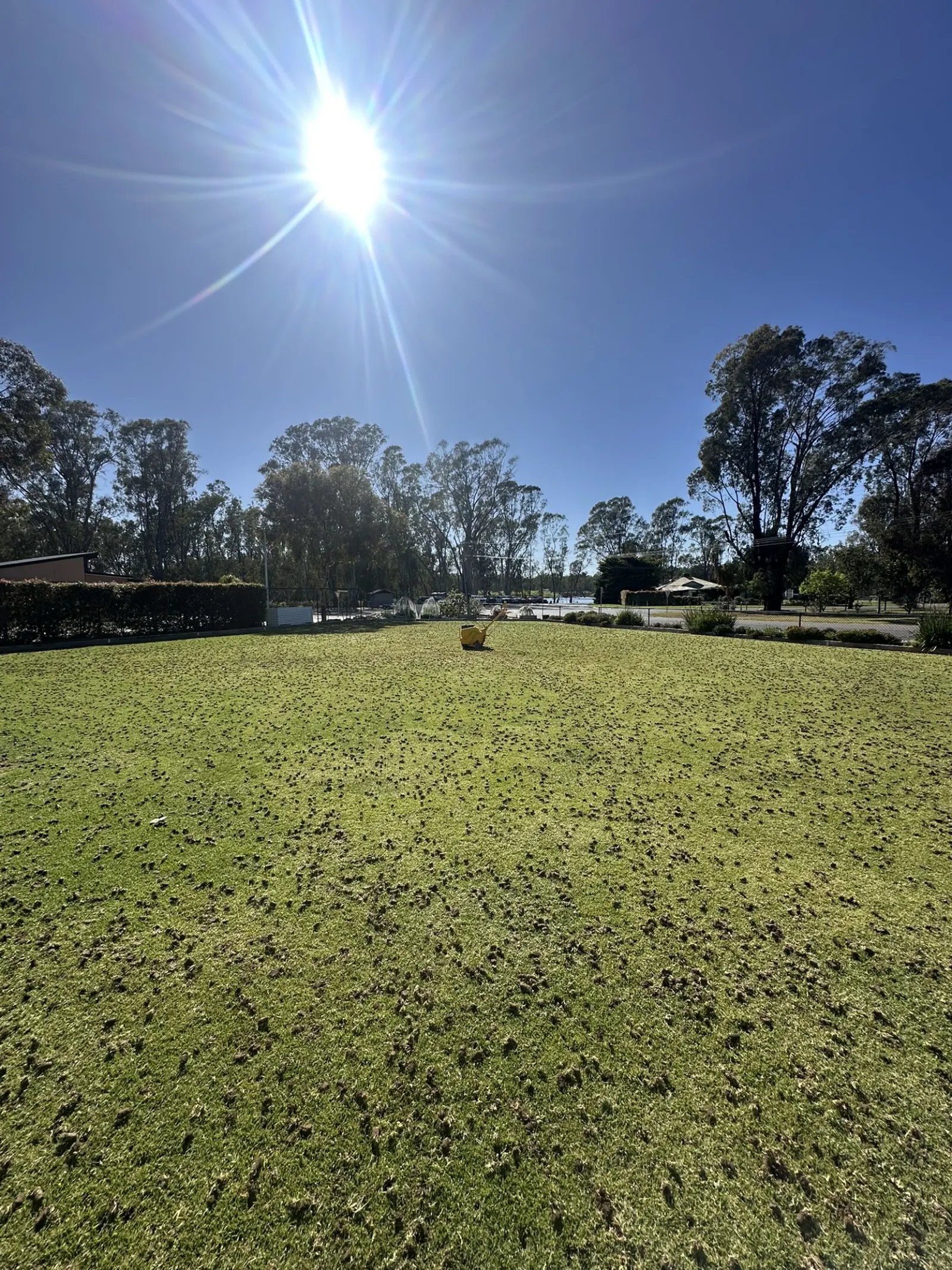
Your lawn will look a bit messy for a week or two. That's completely normal.
Leave the cores
I don't collect the soil cores after aerating. You're welcome to remove them yourself, but most people simply leave them and let the mower pick them up or mulch them back into the lawn at the next mow. Left on the lawn, they break down within 1–2 weeks and return good soil and microbes to the surface.
Water lightly & regularly
Keep the soil moist for the first 1–2 weeks, then return to your normal routine. Avoid overwatering. Had fertiliser applied? See the note below.
Mow after a few days
Give it 2–3 days before mowing. Running the mower over the dried cores helps break them up.
If you've chosen fertilising
I spread the fertiliser straight after aerating, so the granules drop into the fresh holes and go straight to the root zone. It's the best possible time to feed a lawn.
Important: water it in within 24 hours
Give the lawn a good watering (around 10 mm, or 20–30 minutes on the sprinkler) on the day or the next morning. This dissolves the granules into the soil, stops nitrogen being lost to the air, and prevents granules scorching the grass. Keep kids and pets off the lawn until it's been watered in and has dried.
I use a quality blended fertiliser that feeds your lawn four main nutrients. The numbers below are the percentage of each in the blend:
Greener, thicker growth
The nutrient grass uses most. It drives leaf growth and that deep green colour, and helps fill in thin patches.
- Ammonium (9.6%): available almost straight away for a quick green-up.
- Urea (12.4%): converts over the following days for a steadier feed over the next few weeks.
Stronger, deeper roots
Fuels root development and helps the lawn recover from aeration by pushing roots down into the new holes. Phosphorus barely moves through soil on its own, so placing it into fresh aeration holes is especially effective. Most of it is water-soluble, so it's available quickly.
Toughness & resilience
The lawn's "stress nutrient". It helps the grass manage water and improves its tolerance to heat, dry spells, foot traffic and cold, as well as helping it resist disease. Ideal heading into a Border summer.
Deeper colour, better nitrogen use
Needed to make chlorophyll and proteins, so it works hand-in-hand with nitrogen. Without enough sulfur, grass can't make full use of the nitrogen it's given. It's supplied as sulfate, which roots can take up straight away.
When will I see results?
Timing depends on the season, your grass type and watering. Growth is fastest in warm weather with regular water.
-
First 1–2 weeks
Cores break down and the lawn starts greening up as the fast-acting nitrogen and sulfur kick in. Most lawns show a noticeable colour change within 7–10 days in spring and summer.
-
2–4 weeks
The aeration holes fill with new growth. The lawn looks thicker, more even and a deeper green, and you'll be mowing more often.
-
4–8 weeks
The real payoff is underground: deeper roots, better water uptake, and a lawn that handles heat, dry spells and wear much better.
Any questions?
Happy to help, just give me a call or send a text.